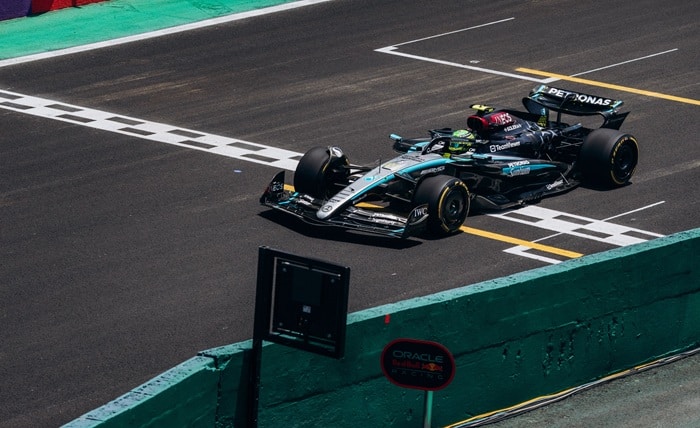
Few motorsports combine raw velocity with such intricate engineering complexity as Formula 1, where cars regularly exceed 230 miles per hour while navigating circuits demanding split-second precision on every single corner. Beyond the obvious spectacle, the sport hides genuinely surprising details about exactly how these speeds get achieved and measured. Fans wanting to follow live coverage and results can check the latest updates at dbbet kenya, where F1 action stays current throughout the racing season.
Understanding Formula 1: More Than Just Raw Speed
Formula 1 represents motorsport’s most technologically advanced championship, bringing together the world’s most skilled drivers competing in purpose-built single-seater cars across a demanding international calendar spanning multiple continents throughout the season.
The sport has operated continuously since 1950, establishing itself as racing’s pinnacle, where teams pursue relentless improvement measured in thousandths of a second, reflecting the sport’s genuinely obsessive relationship with performance optimization at every level.
What many casual fans don’t realize is that Formula 1 functions as a genuine technological proving ground too, with innovations developed purely for competitive racing frequently trickling down into broader automotive safety technology used in everyday consumer vehicles.
How Fast Do F1 Cars Go: The Official Record
Addressing how fast do f1 cars go requires distinguishing between different measurement contexts, since official race conditions, qualifying sessions, and unofficial testing scenarios have each produced genuinely different top-speed figures throughout the sport’s extensive history.
The officially recognized fastest speed recorded during an actual Grand Prix race stands at 231.46 miles per hour, achieved by Valtteri Bottas driving a Williams during the 2016 Mexican Grand Prix, benefiting significantly from that circuit’s high-altitude location reducing air density.
Few fans realize an even higher unofficial figure emerged during that same 2016 season, when Bottas’s Williams reportedly reached 234.9 miles per hour during Azerbaijan Grand Prix qualifying, a measurement that occurred beyond the official speed trap used for verified records.
Surprising Fact: Why Altitude Matters More Than You’d Think
One of the more counterintuitive facts about F1 speed involves track elevation, since thinner air at high-altitude circuits like Mexico City genuinely reduces aerodynamic resistance, allowing cars to reach higher velocities than identical cars would achieve at sea level.
This altitude effect explains why Mexico’s circuit has produced so many historical speed records despite not being the sport’s longest or most obviously “fast” track by pure layout design, surprising many fans who assume top speeds depend purely on straight-line length.
Monza, Italy’s circuit nicknamed the “Temple of Speed,” achieves its own remarkable speeds through a different mechanism entirely, since drivers spend over eighty percent of each lap running at full throttle across its distinctive layout of extensive straight sections.
The Hidden Engineering Behind These Extraordinary Speeds
These extraordinary speeds result from a genuinely sophisticated combination of powerful hybrid power units, minimal aerodynamic drag configurations, and extremely lightweight construction, all working together to maximize achievable straight-line velocity.
Modern power units combine a 1.6-liter V6 internal combustion engine with an energy recovery system, collectively producing approximately one thousand horsepower, a figure that surprises many fans given how compact these engines actually are compared to their output.
Beginning with the 2026 season, significant regulation changes shifted the power split toward fifty percent combustion and fifty percent electrical deployment, meaning battery management now plays a considerably larger role in achieving top speed than casual fans typically appreciate.
A Lesser-Known Fact: The 2026 Grid Expansion
Something many casual fans might not know is that the 2026 season brought a genuinely significant structural change to the sport, expanding the grid to include eleven total teams following the addition of a new manufacturer entry, increasing the field to twenty-two drivers.
This grid expansion required corresponding adjustments to qualifying elimination numbers throughout each session, since accommodating additional cars meant qualifying’s knockout stages needed processing a larger overall field while still narrowing toward the traditional ten-car final shootout.
Most fans following the sport casually rarely notice these structural adjustments, yet they genuinely reshape competitive dynamics throughout an entire season, since more cars competing for limited advancement spots increases pressure during early qualifying segments.
Understanding F1 Qualifying: The Knockout Format Explained
F1 qualifying operates through a three-stage knockout format first introduced in 2006, determining each driver’s starting grid position for Sunday’s Grand Prix through progressively shorter timed sessions held during Saturday’s schedule.
The opening session, Q1, runs eighteen minutes and includes the entire field, with the five slowest competitors eliminated at its conclusion, their grid positions set based on their fastest recorded lap during that particular segment of qualifying.
This elimination process continues through Q2’s fifteen minutes, again removing the five slowest remaining drivers, before the surviving ten competitors advance into Q3’s thirteen-minute session to determine the coveted pole position for Sunday’s race.
A Fact Most Fans Miss: The Final Q3 Shootout Strategy
Q3 represents qualifying’s ultimate pressure test, where the ten fastest remaining drivers typically complete one preliminary “banker lap” before attempting a final, all-or-nothing flying lap as the session clock approaches zero, a strategy most casual viewers never notice.
During this crucial final segment, teams typically configure their power units toward maximum aggressive settings, deploying every available kilowatt of stored hybrid energy specifically to secure the fastest possible single lap before the session concludes entirely.
What many don’t realize is that track conditions genuinely improve throughout each qualifying session too, since circuit grip typically increases as more rubber gets deposited onto the racing line, meaning timing your final flying lap correctly meaningfully influences your ultimate result.
The 107% Rule: A Safety Regulation Few Fans Know About
Formula 1 maintains a specific safety regulation called the 107% rule, requiring every driver to record a Q1 lap time within 107% of the fastest time set during that session in order to earn eligibility for Sunday’s actual Grand Prix race.
This regulation, introduced back in 1996, exists specifically to prevent dangerous speed disparities between competing cars, ensuring significantly slower vehicles don’t create genuine safety hazards by racing alongside considerably faster competitors during actual Grand Prix competition.
Interestingly, drivers who fail meeting this specific threshold aren’t necessarily prevented from racing though, since stewards retain discretion to grant exceptions when external factors like mechanical failures, rather than genuine performance limitations, explain an underwhelming qualifying session.
Sprint Weekends: A Different Qualifying Format Entirely
Certain race weekends throughout the season incorporate an alternative sprint format, featuring a separate, shorter qualifying session called the Sprint Shootout that determines grid positions for Saturday’s abbreviated hundred-kilometer sprint race.
This sprint qualifying format mirrors the standard three-session knockout structure but compresses each segment considerably, running just twelve, ten, and eight minutes respectively across sessions officially designated SQ1, SQ2, and SQ3 throughout that particular weekend.
Specific tire compound requirements apply during sprint qualifying too, with regulations mandating medium-compound tires during the first two segments while reserving softer, faster compounds exclusively for the decisive SQ3 shootout portion of the abbreviated session.
The Fastest Qualifying Lap Ever Recorded
The fastest official qualifying lap in Formula 1 history was set at Monza in 2025, with an average speed exceeding 264 kilometers per hour, showcasing just how extraordinarily quick modern qualifying-specification cars have become under ideal low-fuel conditions.
This achievement surpassed a longstanding previous record that had stood for approximately sixteen years, demonstrating how continued technological development consistently pushes achievable qualifying speeds progressively higher across successive competitive seasons of the sport.
These qualifying-specific speed records typically exceed race-condition top speeds considerably too, since cars run with minimal fuel loads and maximum power deployment settings during qualifying that simply wouldn’t prove sustainable across an entire race distance’s requirements.
Why These Facts Genuinely Change How You Watch F1
Understanding these lesser-known details, from altitude’s genuine impact on top speed through qualifying’s evolving track conditions, considerably enhances race weekend viewing, transforming simple lap-time comparisons into genuinely informed appreciation of the sport’s complexity.
Recognizing how the 2026 regulation changes shifted power deployment priorities also helps explain broader competitive shifts throughout the season, since teams mastering the new electrical deployment balance often found genuine performance advantages over less adapted rivals.
Whatever specific technical regulations continue evolving within Formula 1’s ongoing development, these facts collectively demonstrate that the sport’s pursuit of pure speed involves far more genuine complexity than casual viewers typically appreciate at first glance.